
Author:
Adrián Camacho
Short summary:
Green Steps’ latest edition of the Genuine Growth Ecological Psycholgy Course, a series of film screenings, has come to an end. The different screenings showcase the relationship we have with our planet seen from different areas: clothing, means of transport, cities, work, food, etc. After having watched and discussed the different sessions, we present you a review on the course.

As a volunteer with Green Steps, I must say, one gets the opportunity to
go through a training on rather important current issues. As part of such training,
I participated, as my fellow volunteering colleagues did, in Genuine Growth, a
course on ecological psychology specially designed by Green Steps. Now, four
months into my volunteering project, this course has come to and end, and thus
the perfect opportunity to reflect on it has arisen.
But first, let’s talk a little about the course itself. Genuine Growth consists
of a series of film or documentary screenings organized in twelve sessions. Each
of these sessions is focused on a certain area of our daily lives as human
beings (example: the main topic of one of the sessions is food, for another one
it is clothing and so on) and the chosen film constitutes a reflection of the
way in which those sectors impact the environment and, retrospectively, us.
Now, after having witnessed the whole series, I can firmly say that, throughout
its course, Genuine Growth has been an extraordinary chance to explore the different
impacts on our planet and reflect on them. As an example of this, I would like
to put the focus on three of the films included in the course.
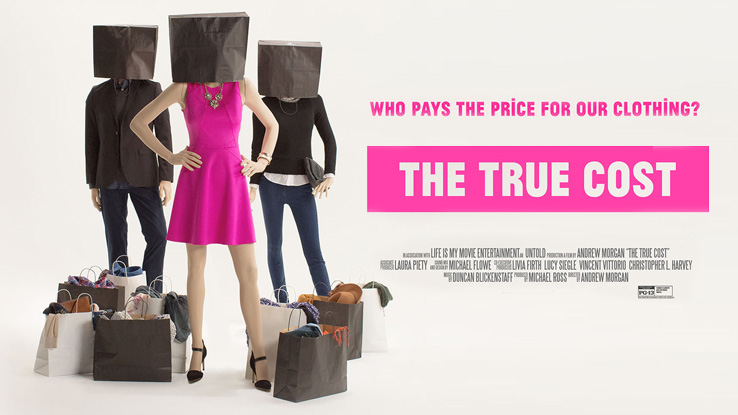
The first one of these is “The True Cost”, a 2015 documentary by Andrew
Morgan. Throughout the whole recording, the numerous social and environmental problems
that the textile industry creates are exposed. We are made aware of the
conditions that workers in Bangladesh have to deal with on a daily basis, as
well as how these conditions resulting from the companies’ never-ending hunger
for money often lead to their death by the collapse of the factories. This
gruesome example made us realize the impact that one of the main industries nowadays
has on people all around the world. In fact, at that moment, we started
checking the place where our clothing came from and then reflected on the way the
people who made them may live and work, thus making us question the importance
of our buying habits and choices.
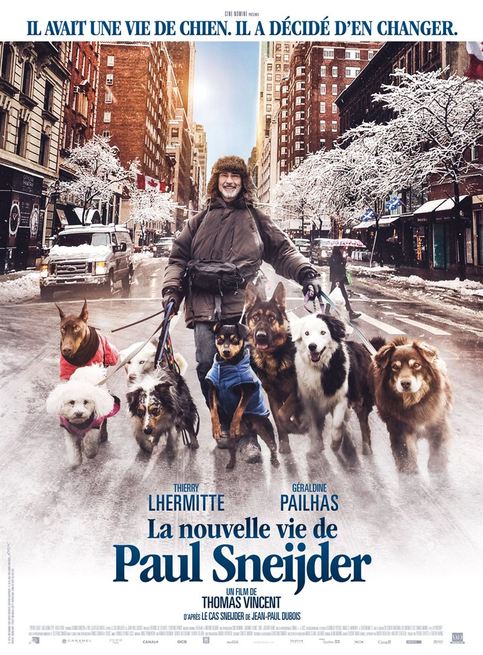
The second one that I would highlight is “The New Life of Paul Sneijder”,
a 2016 film by Thomas Vincent. This film greatly differs in tone from the rest,
but that also helps to make it stand out among the others. It tells the story
of a man who survived an elevator accident where his own daughter died. After
the incident, he starts to reflect on his life choices and his morals,
eventually leaving his job to become a dog-walker. Without spoiling the end of
the movie, I can say that we felt conflicted with the ending and the final
choice he made, but we all agreed on the scariness of people going to
unimaginable lenghts in search of money. A perfect example of this was the wife
of the protagonist, who wanted to exploit the death of her stepdaughter for her
biological sons’ benefit. Apart from this, after watching the movie we
discussed about what “work” means for us, if it’s important to enjoy our jobs
and to what extend our motiovation and vocation ultimately play a role in our
choice of job, the latest being a very recurrent topic these days.
Last but not least, I could
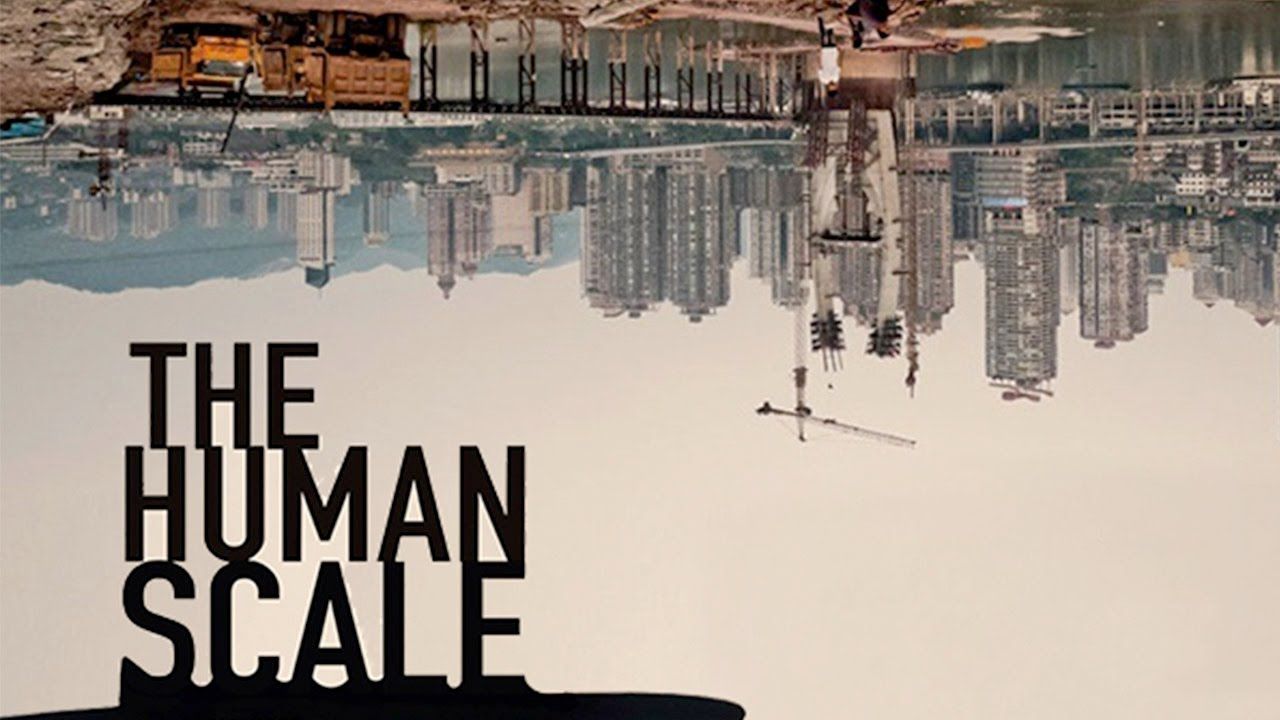
not complete this review without mentioning “The Human Scale”, a 2012
documentary by Andreas Dalsgaard on the planning of cities in our current
modern world. As we were watching the recording, we could see that some of the
mayor cities on the planet act more as a sort of “human zoo” than as a place
where people can enjoy life. The architecture and building distribution is
often decided without consideration for the quality of life of its inhabitants,
sometimes even prioritizing cars over them. Such is the example of Dhaka, the
capital of Bangladesh, where there is little to no regard for pedestrian
transportation unless it’s by a private car, which is perfectly visible in the
city planning. The contrast with other cities like Copenhagen is made evident in
the documentary by showcasing a more pedestrian-focused organization in the
second city.
This juxtaposition led us to reflect on what we value the most in our
cities, as well as the impact that the way in which our cities are planned has
on us. At the end, nobody wants to live in a concrete cage, so a change in our
cities design should be made in order to achieve a greater living standard for
everyone, or at least that was the conclusion I arrived to.
It must be said that these three movies are only a small part of the
whole course, but from my perspective they are enough to get an idea on how the
different topics are showcased and which type of discussions can develop after
a film screening, since each recording offers the opportunity to reflect on the
evolution of the issue as well as on its current impacts. On another note, even
though the movies can change from one edition of the course to another, the
topics remain the same, thus there is always space for preparation. Therefore,
I would recommend Genuine Growth to anyone who may have even the smallest
interest in our current world situation social, economical or environmentally,
since it offers a deep insight plus the chance to share it with a community.
further reading:
· Check
out all 12 course session: https://ark.greensteps.me/library/genuine-growth-12-moderated-online-film-sessions-on-how-our-mindset-impacts-the-planet
Interested to start a nature learning space in
your town or school?
· https://ark.greensteps.me/page/create-community/
· https://ark.greensteps.me/page/commons-mentor/