


Author:
bee-eater
Short summary:
Especially in times like these, when democracy is under attack from all sides, we must celebrate the bright spots: a peaceful transfer of power rather than a bloody power struggle in our hometown of St. Pölten. A red-green coalition has been formed, and Walter Heimerl has been confirmed as deputy mayor. During the last legislative term, as a city council member, he consistently supported Green Steps’ work during critical phases. A look back and a look ahead.

Nature Monuments
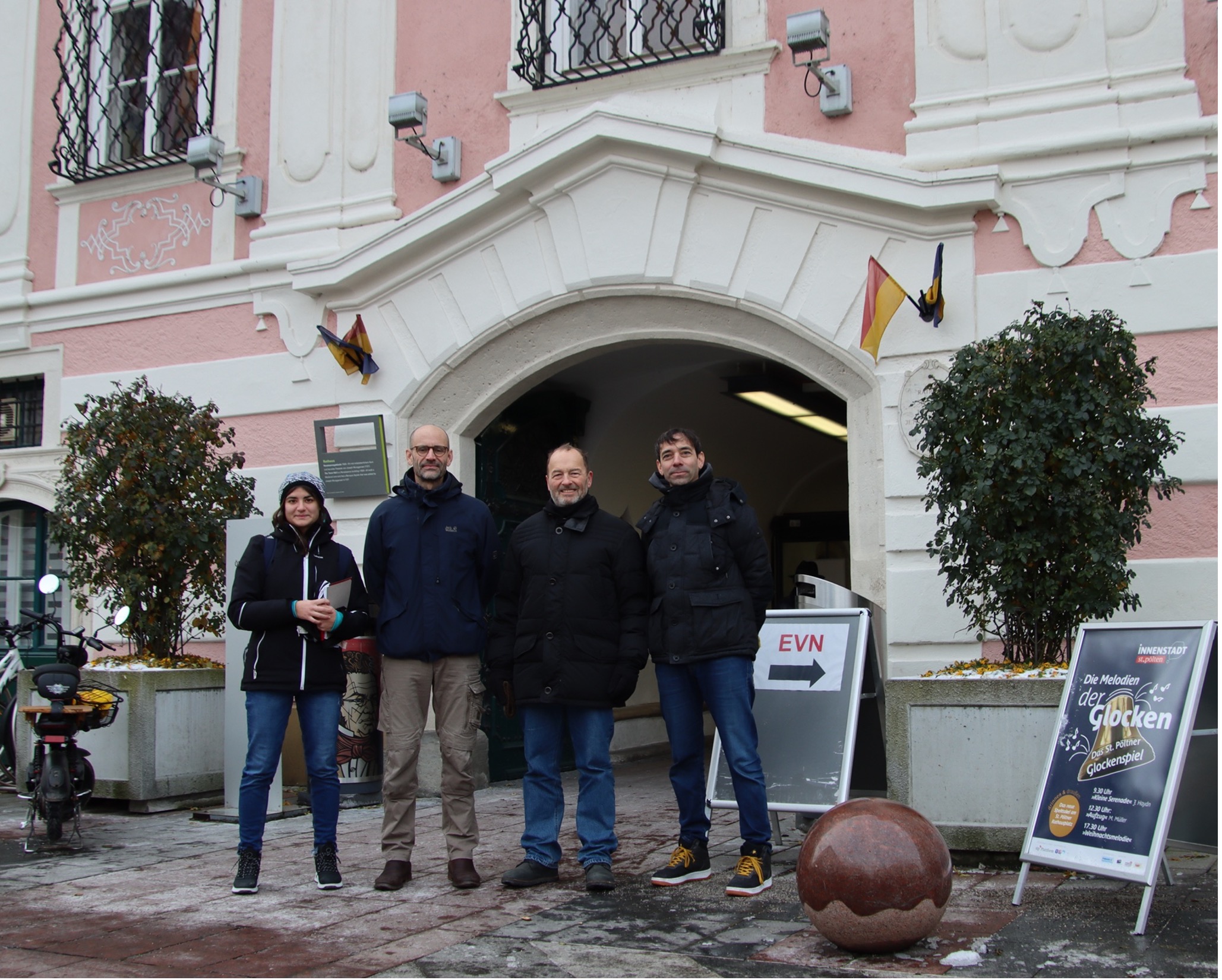
1. At the end of 2022, we submitted a mass petition to the city government seeking to designate 265 old trees as 185 natural monuments, after a friendly intervention with the incumbent mayor and his city councilor for nature conservation had failed. The City Council is still processing the applications, but more than a dozen new natural monuments have already been designated as a result of this initiative, thereby breaking the 20-year inaction of the SPÖ city government. The City Council is now preparing its own city map that identifies all natural monuments and maintains the data. Unfortunately, our underlying intention—to utilize old trees as educationally valuable resources—has not been understood.
School Garden Design Competition
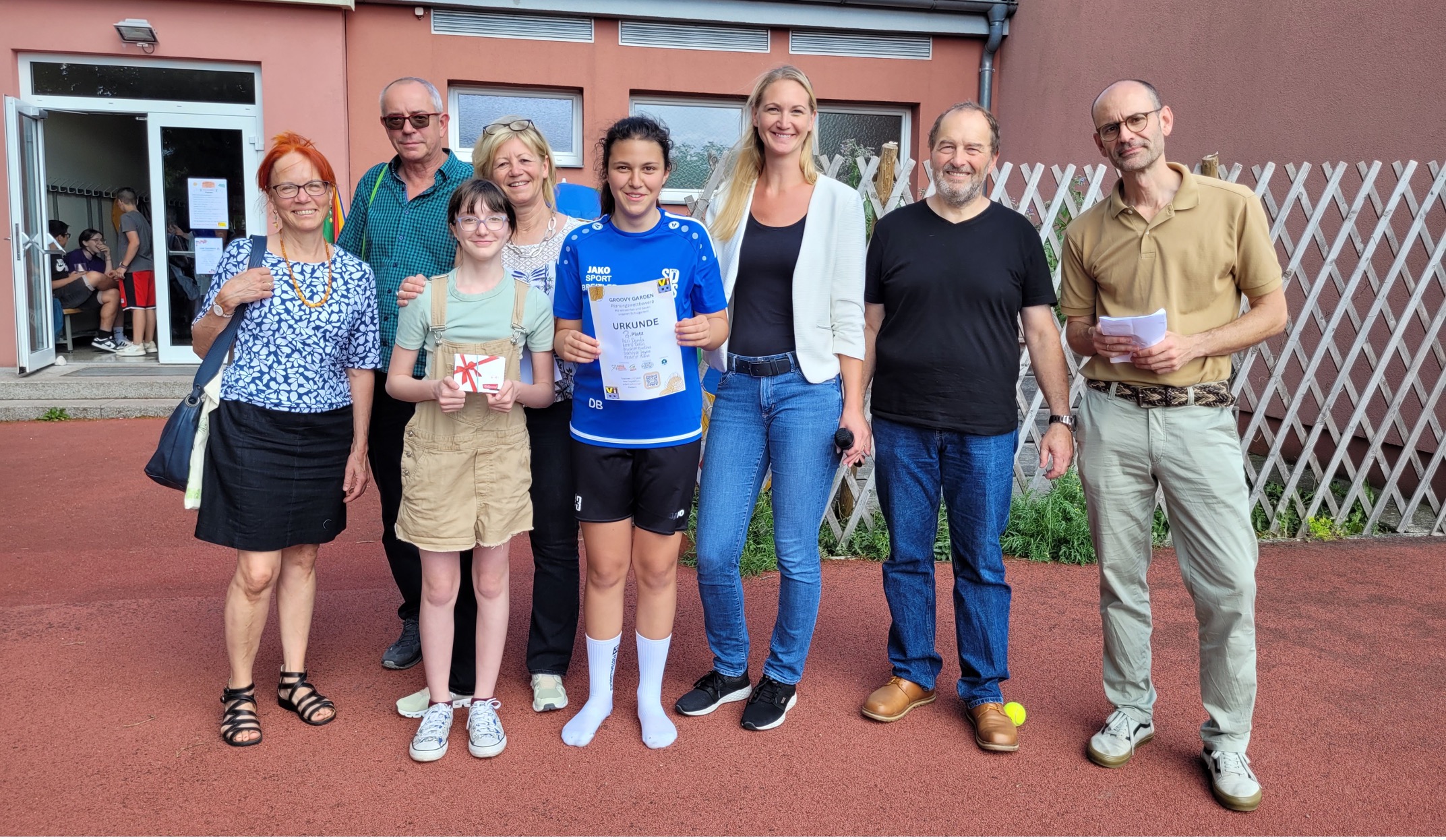
During my time in the public education system, the Green Party supported my school vegetable garden project at St. Georgen Middle School, for which I faced opposition from all sides, particularly from the SPÖ school board. Walter attended the awards ceremony for the school garden design competition I had initiated. Unfortunately, the project had to be discontinued due to a grant that had been promised in writing by former Deputy Mayor Harald Ludwig but never paid out.
Lower Austria Environmental Protection Award
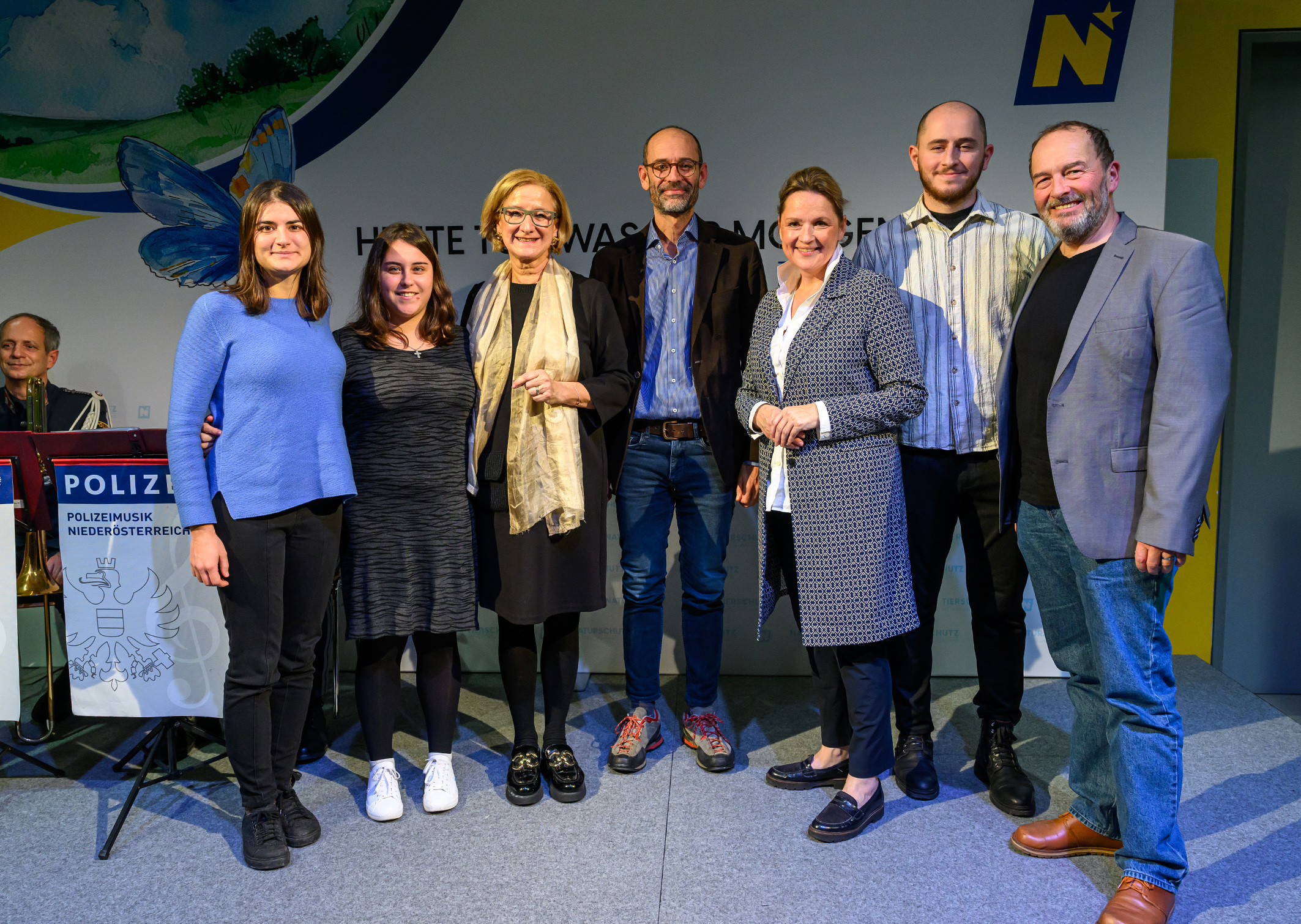
And it was also Walter who successfully submitted Green Steps’ innovative environmental education program to the State of Lower Austria, for which our association was awarded the Josef Schöffel Prize for Environmental Protection at the end of 2024. In doing so, the state recognized not only the collaboration among three organizations to place old trees in the city under protection, but especially the software developed by Green Steps, which functions similarly to Webuntis or SchoolFox as a school information system (SIS) and supports the educational exploration of the local ecosystem. A central feature is a decentralized tree registry that supplements the limited official data with contributions from students and citizens.
I congratulate the Greens of St. Pölten on their role in the next administration, and especially Walter Heimerl, who has more than earned the position of deputy mayor!
What I hope to see from the Red-Green City Government.
Unfortunately, the long-overdue reform of the public education system was not really a focus of any party’s campaign. Strategic, interdisciplinary solutions are needed that cannot be implemented within existing administrative structures. Now more than ever, policymakers must think outside the box and act in a solution-oriented manner.
This includes strengthening and providing better funding for middle schools in St. Pölten’s neighborhoods, which have been neglected in recent years in favor of prestige projects like the Kikula. With an annual operating budget of EUR 1.5 million, the Kikula continues to divert valuable resources from the public education system—resources that could be put to better use given the budget constraints. Teachers who have taught in both St. Pölten and surrounding municipalities are aware of the precarious situation at municipal compulsory schools. Parents in St. Pölten who send their children to schools in other municipalities can explain what is going wrong in our municipal education system.
Environmental education, a connection to nature, integration, and a sense of local responsibility must become an educational priority that the school authority supports. The attitude of the current mayor, who told me in 2021 that, as the school authority, he can only issue instructions to the school superintendent, must change. The city can actively support the compulsory education system at various levels. Concrete proposals that I have already submitted—without any response—to the city’s Environmental Protection Committee are listed below, and the full presentation from April 3, 2025, is available as a video.
A. Free transportation – for students of compulsory schools who go on field trips with teachers within the city limits during class. This measure allows teachers to make lessons more varied and to visit different learning locations within the city.
B. Waste separation – every compulsory school must be equipped by the city with containers suitable for waste separation. Currently, classrooms have only one trash can where everything goes, unless a dedicated school administration has introduced waste separation on its own initiative.
C. Vegetable gardens – every school class should have a 9m² vegetable patch in the school garden that is integrated into lessons over the years. The city could facilitate this important educational content by issuing a directive to school administrators and providing the necessary funding (a budget has already been drafted by Green Steps), rather than obstructing progress or shifting responsibility for appropriate educational content onto others.
D. St. Pölten City National Park – sometimes it takes visionary ideas that involve a wide range of municipal departments and society at large to truly bring about change. The St. Pölten City National Park is such an idea. What is it about? It’s about treating our city like a formal national park: the city becomes a space for nature conservation and nature education. There are plenty of examples of this—Green Steps has developed a concept and presented it to the SPÖ Climate Coordination Office—again without any response.
E. Trash collection—every school class should carry out a trash collection campaign supported by the city or the municipal maintenance department at least once a quarter. You can’t teach an old dog new tricks.
In summary, it should be noted that Matthias Stadler and his team have achieved a great deal for St. Pölten in the area of higher education, for which we should all be grateful. Important strides have also been made in the area of kindergartens. However, the compulsory education system has been grossly neglected, so this must be the new government’s absolute priority for the next legislative period.
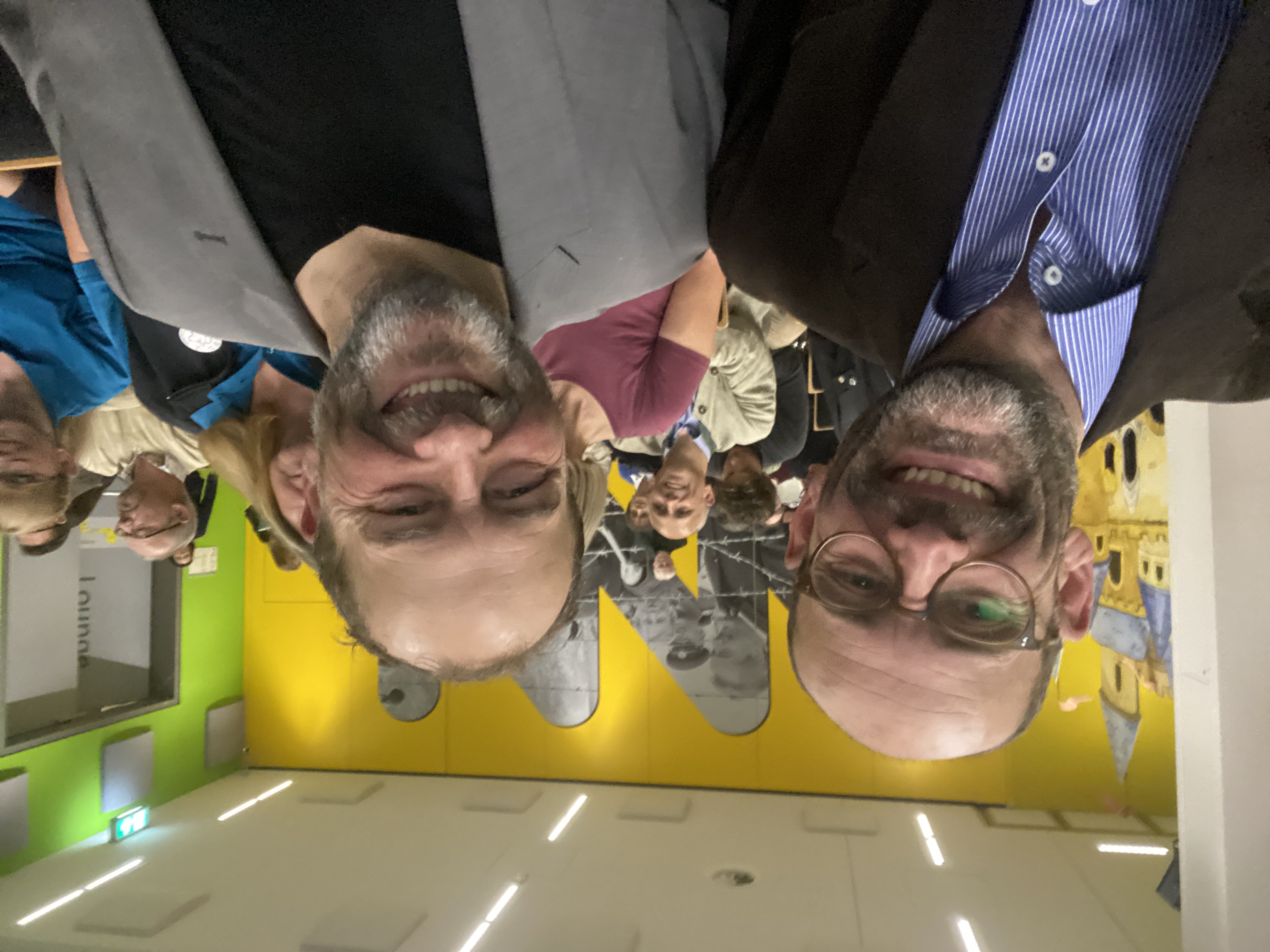
Dear Walter, now that you’re in power, I hope that we’ll really get things moving over the next five years.
Further reading:
- https://www.ots.at/presseaussendung/OTS_20221214_OTS0166/alte-baeume-in-gefahr-stadt-unterlaesst-schutzmassnahmen
- https://www.greensteps.me/library/nd-68-one-new-natural-monument-dozens-still-waiting.php
- https://www.greensteps.me/library/josef-schoeffel-award-for-services-to-environmental-protection.php
- Schulen als Epizentren der Transformation: https://youtu.be/SYeKWRVnkck t
