
Author:
bee-eater
Short summary:
A visit to the Institute for Elementary Education in Linz, where three generations are working to foster a deeper connection with nature. Once again, it has been proven that regenerative initiatives must find a firm foothold in cities and schools.

The annual gathering of professional nature educators, which took place in February at the snow-covered St. Martins Therme in Burgenland, unexpectedly led us to the Institute for Elementary Education in Linz, where Claudia Troia has been teaching biology for 26 years.
Claudia and I share several common interests: applied environmental education, Viktor Frankl’s logotherapy, and life between two cultures. Our initial meeting in Burgenland was followed by several long emails in which we explained our paths into environmental education, and finally an invitation to visit her school garden at Bafep Linz.
Even during our conversation at the St. Martins Therme, I noticed that Claudia practices place-based education, but like many other educators in this country, she had not yet heard of the term or the structured method. It made sense to get to know her work on-site to understand why broader integration into the formal education system isn’t working.
Like myself, Claudia was born in Linz and suffered from the city’s severe industrial pollution during her childhood. We both had asthma, and our focus on applied environmental education has its roots in this early experience. Claudia studied to become a biology teacher in Salzburg and began teaching at Bafep Linz immediately after graduating.
In 2018, she took a break and decided to shift her teaching focus to nature experiences, integrating into her lessons those educational elements that, “with a little common sense,” should have a permanent place. At its core, Claudia’s goal was to make nature tangible, rather than just talking about it in class. Thus, the structure of a flower should not be learned from a picture in a textbook, but by examining a real flower.
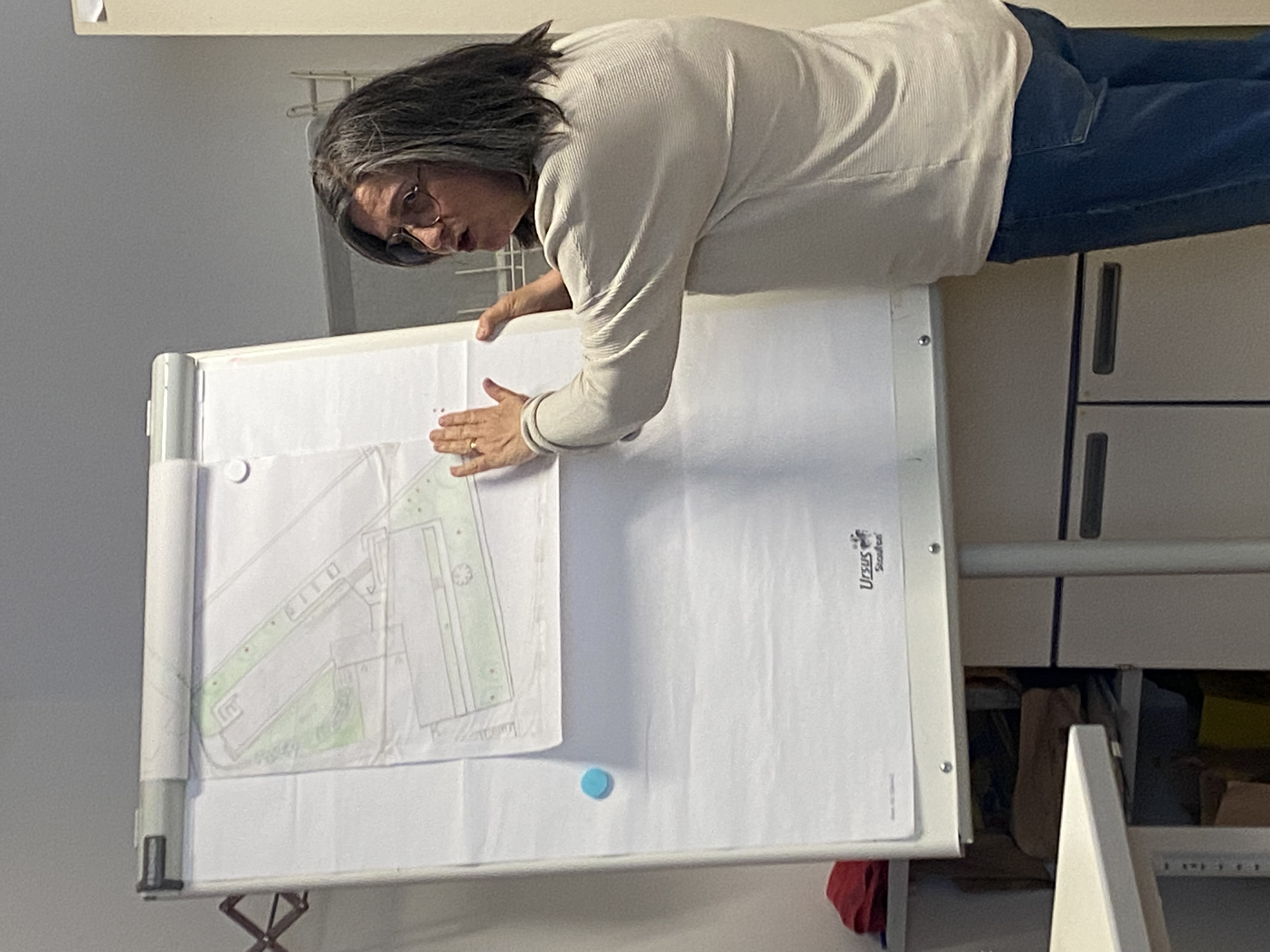
The idea quickly evolved into an educational plan that now includes a training forest and a training garden. Claudia integrates both learning environments into the curriculum for prospective kindergarten teachers over a five-year period. For example, in their fourth year, students visit the educational forest, while in their second year they explore the school grounds and study plant germination hands-on.
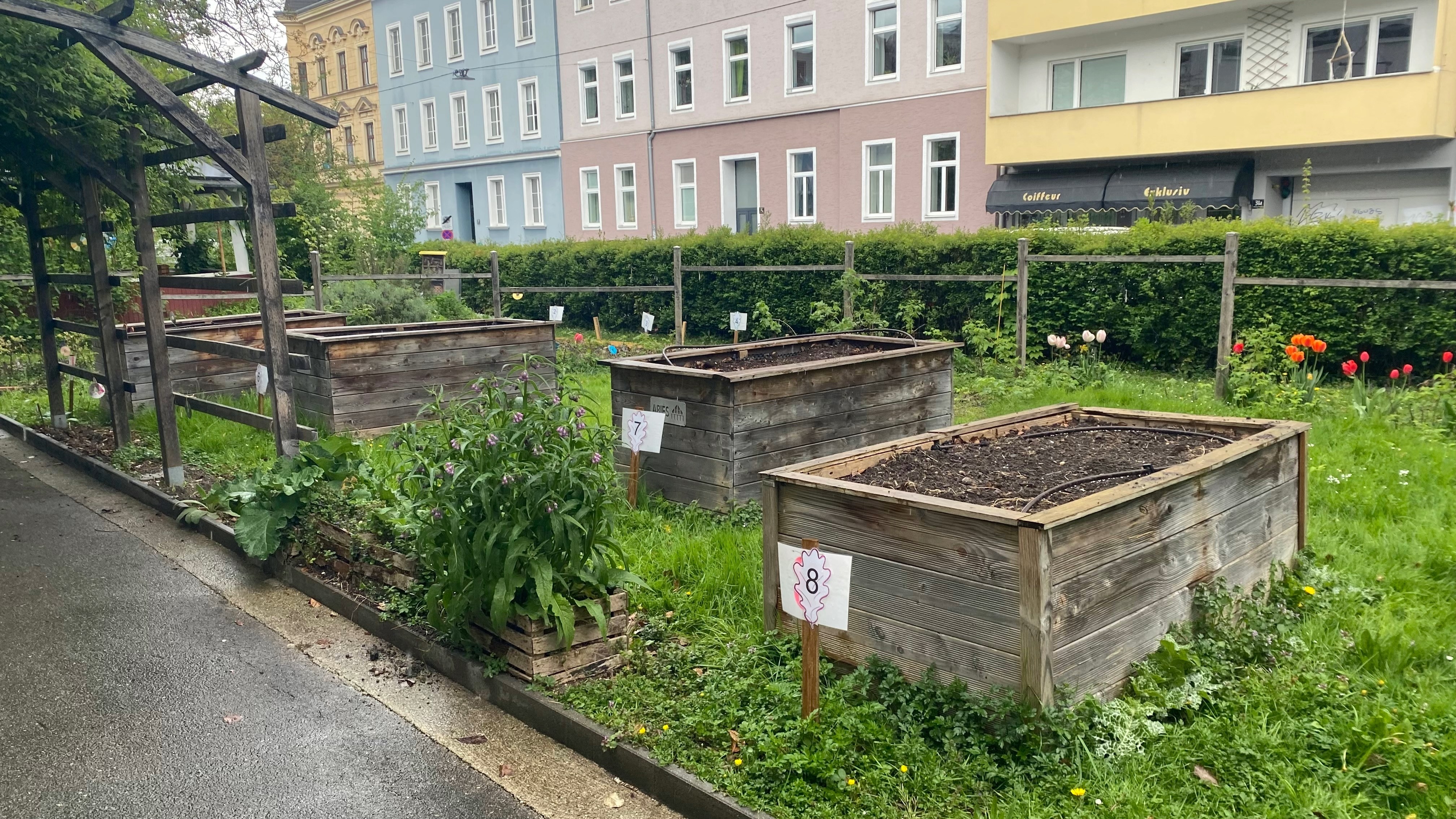
The educational garden was started in 2018 on a 1,400-square-meter plot right next to the school building. Sixty teachers and 600 students worked together to complete the groundwork. Parents provided materials, and a student’s uncle facilitated a professional landscape architecture plan that incorporated the students’ ideas competition.
What makes a Kindergarten college unique is the integration of three generations into the educational process, which is very reminiscent of indigenous learning or, within our formal educational structures, comes closest to indigenous learning. While in a “normal” school the teaching staff and the students each represent one generation, at Bafep a third generation is integrated into the training kindergarten. In the case of Claudia, who after 26 years of teaching is not far from retirement, one could even speak of four generations.
Back to the training forest. This is visited by a different team of students from the fourth-year class every week.
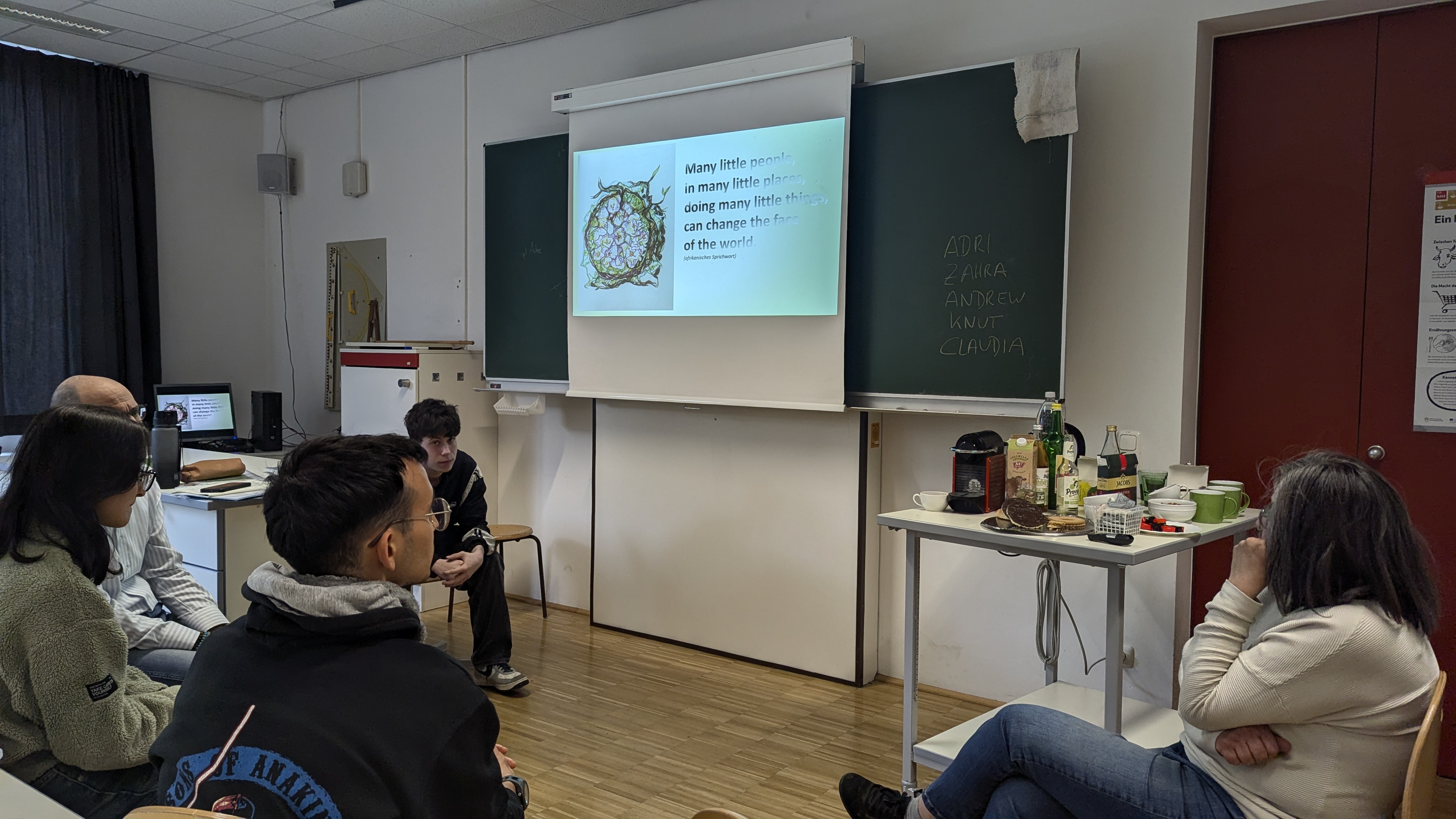
In the morning, the students accompany a group of toddlers from the training kindergarten and observe them as they explore the forest. In the afternoon, Claudia Troia leads a reflection session with the students to discuss their observations.
This description in particular reminded me very much of my vision for the future of education, in which “elders” like Claudia gently guide young adults to help the next generation experience respect for and a connection to nature. I have no doubt that the rapid advancement of artificial intelligence will disrupt our formal education systems, breaking away from industrial-era templates. In BAFEPs that teach in a nature-oriented way, such as in Linz, one can already catch a glimpse of the future of education.
.jpg)
Read more:
- BAFEP Linz: https://www.bafep-linz.at/
- On Education Crisis and Prisoner’s Dilemma: https://www.researchgate.net/publication/358395949_On_Education_Crisis_and_Prisoner's_Dilemma
- Unlocking Human Potential Through Play: https://www.researchgate.net/publication/351067535_Unlocking_Human_Potential_Through_Play
- On Nature Alienation & Nature Alignment: https://www.researchgate.net/publication/391521327_On_Nature_Alienation_Nature_Alignment
- A Path towards holistic Adulthood with Bill Plotkin: https://www.youtube.com/watch?v=S25UKlLq5m8
- Daniel Wahl: Reconnecting to place for planetary health
Do you want to establish and sustainably scale a nature learning space in your city or school?
• Contact us at [email protected]
Subscribe to our newsletter:
• https://www.greensteps.me/membership.php
