
Author:
Green Steps
Short summary:
An Interreg financed project in the Austrian-Slovenian border region has kept us busy in fall. It explores how bioregional identities can be shaped through place-based learning formats and how architect Christopher Alexander's pattern language can be applied for the development of a place-based curriculum.

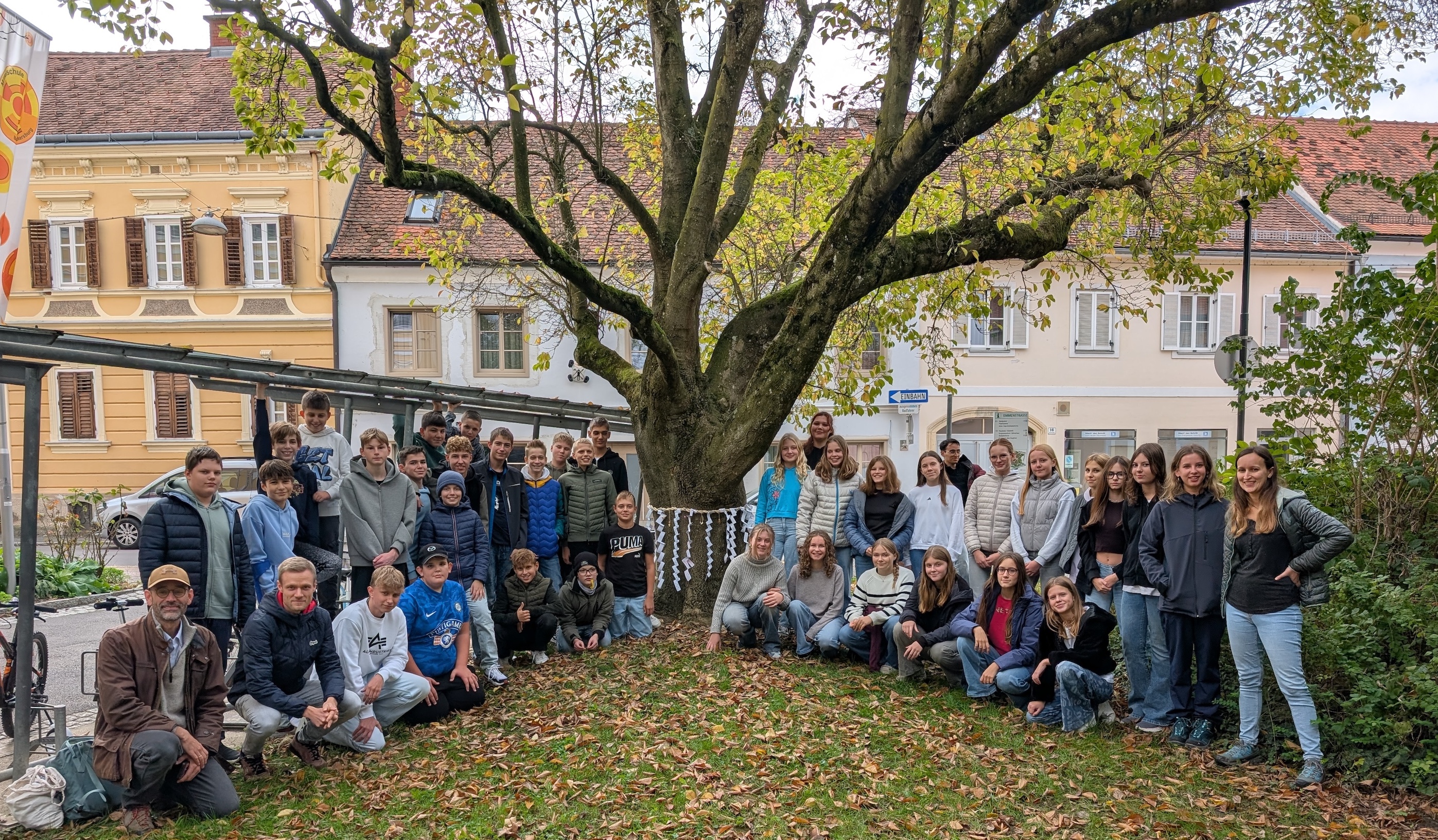
The Interreg project “Mura Calling” strengthens public awareness of the 5-country Biosphere park Mura-Drava-Duna among upper secondary students and promotes a shared bioregional identity across the Austrian–Slovenian border. Green Steps tested and refined place-based learning methods with local schools, NGOs, and municipal actors and explored opportunities of scaling bioregional awareness within the region.
Three interconnected thematic pillars emerged: the historical development of Bad Radkersburg, the role of the 5-country Biosphere Park in forming a bioregional identity, and the ecological challenges resulting from the industrial regulation of the Mur River. The report translates these insights into a set of actionable recommendations including age-differentiated educational trails, community-based mapping strategies, participatory nature interpretation, and the integration of gamified learning tools using educational technology.
By embedding learning processes directly in the landscape and involving students as active contributors to their region, the report demonstrates how environmental education, community engagement, and cross-border cooperation can mutually reinforce each other. The project sets the groundwork for a long-term, scalable model of place-based education that supports ecological stewardship, cultural connection, and the development of bioregional identities across national borders.